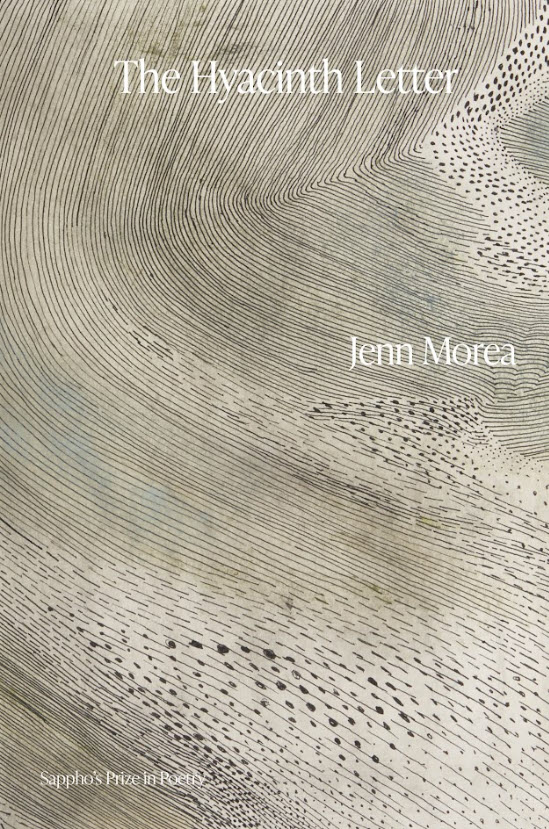
Rachel Carson wrote her “hyacinth letter” to my grandmother to explain the “lovely companionship of your letters” which provided for her a “white hyacinth for [her] soul.” For those of us who find joy and solace in nature, in loving friendship, in the expression of soul in words, Jenn Morea’s poetry is itself a lovely companion to be greeted again and again.
—Martha Freeman
Rarely have I felt so invited into the world of a book of poems, and yet so often like an intruder — a welcome wanderer at the edge of its fields, watcher within its rooms, listener beyond its walls, dweller beneath its stars — blushed and compelled to both witness and belong to something so intimate and yet familiar in its vivid expression of a pure and delicate human desire to speak.
—Mark Turcotte
In the quietest of ways it is concerned with the largest of themes. It has—perhaps from Celan, Dickinson, and Niedecker—this astonishing ability to make of the emotions an elemental space. In this way, the relational concerns that course throughout the series of poems become not merely interpersonal in nature, but oddly, subtly, gently, cosmic. That allows “night” and “darkness” to gain the phenomenological importance they here carry, but allows them to be realized in the poem not through any theoretical apparatus, but through a sense of intimacy, through the personal. That is a true gift—and one given to the reader in the most accessible of ways. There are very few poets writing today (that I know of at any rate) so invested in the metaphysical and writing in that tradition with such lightness.
—Dan Beachy-Quick
PRESS
Windy City Times profile by Carrie Maxwell: “Chicago poet Jenn Morea discusses her creative journey and new book”
Boothbay Register book review by Isabelle Curtis: “Famous Southport-based friendship inspires poetry collection”
PURCHASE
 jennmorea.com